February 2019 : Monthly Summary
February 2019 : Summary
UK Species Year List to February : 103
Total UK Species in February : 100
New “Year Ticks” in February : 31
New “Life Ticks” in February : 1
Year ticks in February
Well there are a lot of year ticks in February but notable ones were:
- Common Scoter at Hoylake on the 19th February
- Ringed Plover at Hoylake on the 19th February
- Avocets at Burton Mere Wetlands 21st February
- Egyptian Goose at Shotwick Fields 21st February
- Twite at Connah’s Quay 21st February
- Green Sandpiper at Sandbach Flashes 26th February
Life ticks in February
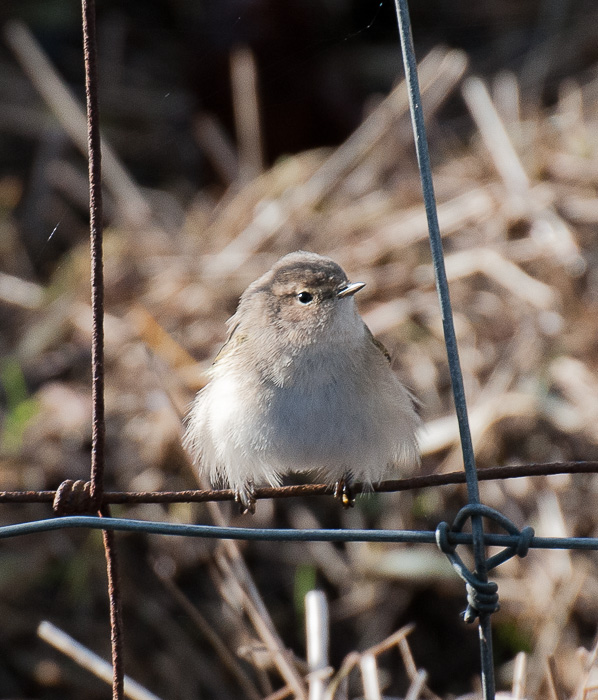
- Blythe’s Reed Warbler at Hope Carr Nature Reserve on 14th February 2019
Summary
The arctic weather eased off a little by the middle of the first week in February and we managed to get to the birding group morning, originally scheduled for North Wales but, due to the weather, relocated to Pennington Flash where we had quite a nice morning with all the usual Pennington birds. The highlight was probably extremely close views of a Kingfisher from the Horrocks Hide – bins weren’t even requied for passable views. Also plenty of Goosander was nice to see and good numbers of Goldeneye as well as the usual cast. At the Bunting Hide we even got a Willow Tit. On our way back home we stopped off at the sewage works at Hope Carr Nature Reserve to try for the Blythe’s Reed Warbler thathas been there reently but with no luck.
A walk around Sale Water Park on the 11th produced a suprisingly large number of species and even a few year ticks.
On the 12th we decided to forego the birding group visit to Frodsham and instead did a round trip of Connah’s Quay, Shotwick Fields, Burton Mere Wetlands and Parkgate getting fantastic, close views of Short-eared Owl and more distant views of ringtail Hen Harrier. We got forty-five species in all during about five hours.
A couple of days later we tried again for the Blythe’s Reed Warbler at Hope Carr Nature Reserve. We had a look on the 12th after a birding group visit to nearby Pennington Flash (see above) but this time we were luckier getting a brief but clear view of the life-tick bird before being moved on by a security chap.
The birding group visit for 19th February was to Hoylake and New Brighton for the high-ish tide of 9.6 metres at 10:48pm. At Hoylake we got year tick Common Scoter and also a pair of Ringed Plover. At New Brighton we got Purple Sandpiper again. Interestingly, though we did not see it, a Sand Martin was reported here a couple of days prior to our visit. Apparantly the earliest Arrival of a Sand Martin ever recorded in on the Wirral.
We still had time to add on a visit to Parkgate after those two places and this gave us probably the best one hour of raptor watching we have ever had. It was truly amazing with nine different raptors seen (5 species) including a rare silver male Hen Harrier – all showing well. It was going to be hard to beat this when we went to Parkgate a couple of days later for an overnigh “high tide/evening roost” experience.
Our overnight visit to Parkgate on 21st and 22nd of February, which took in other locations on the Dee Estuary as well, was never going to be as spectacular as our visit earlier in the week but, over the two days, we did get fifty-nine species and these included both adult male (grey) Hen Harrier and also Ringtails; Marsh Harrier, Buzzard, Kestrel, Sparrowhawk, Merlin and Short-eared Owl. We were a bit disappointed to not get Barn Owl but the best part of the stay-over was the chance to experience the marsh when everyone has left and all there is is the nightime sound of the birds all around the marsh. Also, just to stand in one place, looking at the comings and goings on the marsh for four hours straight was a kind of meditation itself. We have been meaning to do this for a while and it was well worth it. We stayed in the “Lord Nelson” room at the Ship Hotel and this gave us great views of the marsh at sunset and sunrise. There’s nothing better than watching Marsh Harriers from your bedroom window – unless it is Hen Harriers but perhaps next time.
On the 26th the birding group morning was a visit to Sandbach Flashes. Again the weather was fine and positively Spring-like. Not a particularly spectacular species list but a nice Green Sandpiper and a few other good birds like Tree Sparrow and Goosander