Summary of Suffolk, Norfolk Holiday Sightings 30 April – 12th May 2017
The following is a summary of our holiday spent near Rutland Water, Halesworth in Suffolk and Thornham in Norfolk. The two weeks allowed us to visit lots of different reserves and habitats and perhaps the best of these were RSPB Minsmere and Titchwell but also we very much liked NWT Holme Dunes and, at Rutland Water, we had a fantastic range of birds and one of the most wonderful aural experiences. Our days were spent at the following places :
Our holiday, taking in Rutland Water and various sites in Suffolk and Norfolk started out with a visit to Rutland Water on the 30th April. Highlights werea great range of waders including a beautiful, breeding plumage, Grey Plover and good views of a Nightingale. Add to that Black Tern and Osprey and you have all the ingredients for a fantastic days birding.
The following day – the1st of May – we drove to Halesworth but stopped off at Weeting Heath and Lakenheath Fen. We always love our annual dose of UK Stone Curlew and this one was a lot more willing to show itself quickly than last years birds. At Lakenheath I got my first sighting of a Cuckoo and probably the best views ever – certainly the closest ever views – of Hobbies – and lots of them. A Glossy Ibis made up for the Garganey that got away !
On the first day we had setttled in at the Angel Hotel in Halesworth so the next day was mainly spent at Minsmere RSPB on the 2nd May. Highlights were very large numbers of Mediterranean Gulls, a pair of Bar-headed Geese (still not recognised by the BOU) and a Red Knot in pretty much its full breeding plumage, a condition I have never seen a Knot in before and I was much impressed. I was also very interested to see roosting Kittiwakes who are apparently nesting at Sizewell power station which is nearby ! A final reward for the long walk around the site came at the last hide when we got a rather unexpected Mandarin Duck.
The 3rd of May was a bit of a chill-out day with just a short drive out to Snape Maltings where we walked part of the way to Iken Church. There were a few woodland birds about and a few ducks and waders on the water and, of course, the ubiquitous Marsh Harrier !
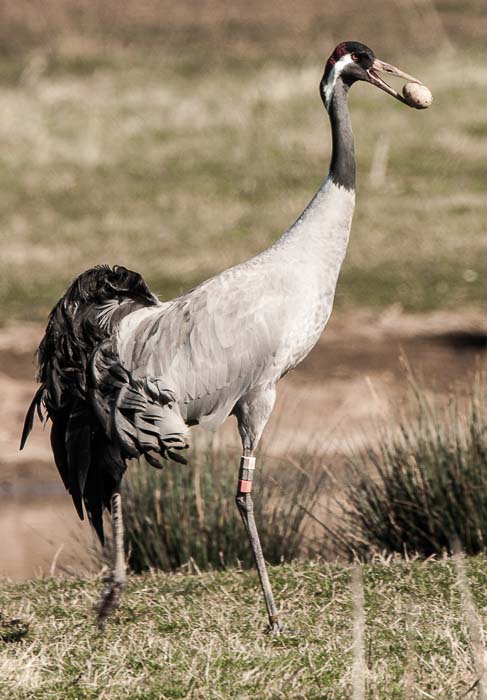
On the 4th of May we left Halesworth for Potter Heigham where we were staying overnight to give us a chance to visit Strumpshaw Fen RSPB and take a boat trip on Horsey Mere. We wasted most of our time at Strumpshaw on a wild goose chase – actually a wild White-tailed Eagle chase but it eluded us by minutes ! This was followed by a freezing cold boat trip on Hornsey Mere which at least got us great vies of flying Cranes.
On the 5th we drove from Potter Heigham to Thornham. En route we dropped in at Cley Marshes WWT where things were a little disappointing but during the drive we got good views of both Hen Harrier and Red Kite
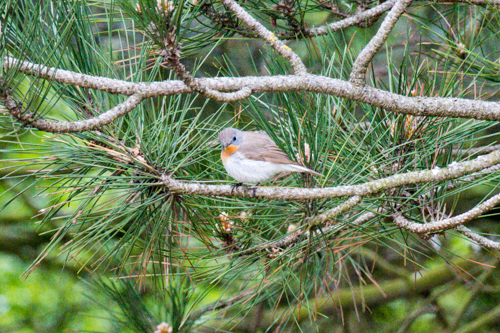
On the 6th we were all settled in at our cottage in Thornham and ready to explore Titchwell RSPB and Holme Dune NWT as well as a quick visit to Hunstanton. It was still pretty cold and many birds seemed to be in hiding. Be that as it may, we still got a good count of birds at Titchwell. The true star of the day, however, was a “life tick” in the form of a Red-breasted Flycatcher at Holme Dune which showed quite well eventually. As if this wasn’t good enough, we also got Redstart, Wheatear and Whinchat all in the same paddock. It had been years since I last saw a Whinchat so I was particularly pleased with that. We finished off the day with Fulmar at Hunstanton Cliffs.
On the 7th May we returned to Holmes Dunes and also had a quick look at Chosely Drying Barns. Highlights were a Lesser Whitethroat and the Red-breated Flycatcher again at Holme Dunes. At the drying barns we still could not find any Dotterel and had to settle for a Yellowhammer instead – but no Corn Bunting which was disappointing.
The 8th of May was a return visit to Titchwell RSPB and Chosely Drying Barns. On this occasion we were supposed to joining a guided birding walk around the reserve but we ended up as the only people and the guy leading it didn’t seem particularly interested. We did manage to add Red-crested Pochard to our list as well as other year firsts. We heard another Turtle Dove but again could not locate it. At Chosely we struck gold with sightings of four Dotterel. As it happened, their visit was a fleeting one and we didn’t see them in the pea field again over several visits.
On the 9th May we had a bit of a shopping morning but then drove over to Santon Downham and Lynford Arboretum where, at the former, we got more Yellowhammer, Stonechats and a few Wood Larks which was especially nice. The day was finished off with an evening walk in Thornham that got us a heard Grasshopper Warbler.
On the 10th the weather picked up at last and after a week or more of overcast, gloomy skies and a really cold wind coming off the sea, we started to feel some sun. Accordingly we headed back to Holme Dunes NWT and Chosely Drying Barns again. This time the Red-breasted Flycatcher had gone but we still got splendid views of Wheatear and the Whinchat was still showing there. Again we heard the Turtle Dove but, again, it eluded us !
The last day in Norfolk, we drove out to a reserve we had read about, “Abbey Farm Bird Hide” Here we were a little disappointed but it was all made worthwhile when after scouring the lanes and fields around we found a nice pair of Grey Partridge, not a bird I have found easy to find.
On our return home, we again stayed over, this time at a very odd golf hotel. This was the only hotel that we could find with rooms close enough to allow us another visit to Rutland Water before returning home. On our way down we had had great views of another Red Kite, increasingly common in these parts, and also a Buzzard, which seems less common there than it is at home !
At Rutland we got a good range of birds again but without doubt the highlight was seeing a Nightingale again; or was it two I saw. It is hard to say because at the end I am sure there were three or four singing around the area between the Bittern Hide and the last hide before reception – a magical experience not to be forgotten. The visit was somewhat curtailed when the most torrential rain started to fall. Everyone was stuck in hides wondering if it would ever stop. Eventually I donned all my waterproofs and we headed back to the car, calling it a day – but what a day !
Over the whole period we managed to see or hear 121 species of birds We added 25 year ticks to make our UK 2017 list 156 species so far and, of course added one “life tick”. Perhaps we had not seen some birds we hoped and/or expected to see – Bittern, Spoonbill etc – but we saw some we were not expecting and any holiday that includes Red-breasted Flycatcher, Stone Curlew, Crane, Glossy Ibis, Wood Lark, Bar-headed Goose, Red-crested Pochard, Grey Partridge, Dotterel, Cuckoo and Turtle Dove can’t be that bad. Add to this a great collection of waders including some in, rarely seen, breeding plumage and Osprey, Hen Harrier, Sparrowhawk, Buzzard and Marsh Harriers galore and it adds up to a splendid birding holiday. Perhaps not hard core birding but, for us, very satisfying.
Suffolk, Norfolk and Rutland Holiday Sightings 30 April – 12th June 2017
| 1 | Greylag Goose |
| 2 | Bar-headed Goose |
| 3 | Brent Goose |
| 4 | Barnacle Goose |
| 5 | Canada Goose |
| 6 | Mute Swan |
| 7 | Egyptian Goose |
| 8 | Common Shelduck |
| 9 | Mandarin Duck |
| 10 | Gadwall |
| 11 | Eurasian Wigeon |
| 12 | Mallard |
| 13 | Northern Shoveler |
| 14 | Northern Pintail |
| 15 | Common Teal |
| 16 | Red-crested Pochard |
| 17 | Common Pochard |
| 18 | Tufted Duck |
| 19 | Red-legged Partridge |
| 20 | Grey Partridge |
| 21 | Common Pheasant |
| 22 | Little Grebe |
| 23 | Great Crested Grebe |
| 24 | Northern Fulmar |
| 25 | Great Cormorant |
| 26 | Grey Heron |
| 27 | Little Egret |
| 28 | Glossy Ibis |
| 29 | Osprey |
| 30 | Eurasian Marsh Harrier |
| 31 | Hen Harrier |
| 32 | Eurasian Sparrowhawk |
| 33 | Red Kite |
| 34 | Common Buzzard |
| 35 | Common Moorhen |
| 36 | Common Coot |
| 37 | Common Crane |
| 38 | Eurasian Stone Curlew |
| 39 | Pied Avocet |
| 40 | Eurasian Oystercatcher |
| 41 | Grey Plover |
| 42 | Northern Lapwing |
| 43 | Common Ringed Plover |
| 44 | Little Ringed Plover |
| 45 | Eurasian Dotterel |
| 46 | Common Sandpiper |
| 47 | Common Greenshank |
| 48 | Common Redshank |
| 49 | Whimbrel |
| 50 | Eurasian Curlew |
| 51 | Black-tailed Godwit |
| 52 | Bar-tailed Godwit |
| 53 | Ruddy Turnstone |
| 54 | Red Knot |
| 55 | Ruff |
| 56 | Sanderling |
| 57 | Dunlin |
| 58 | Black-legged Kittiwake |
| 59 | Black-headed Gull |
| 60 | Mediterranean Gull |
| 61 | Mew Gull |
| 62 | Herring Gull |
| 63 | Lesser Black-backed Gull |
| 64 | Great Black-backed Gull |
| 65 | Black Tern |
| 66 | Common Tern |
| 67 | Sandwich Tern |
| 68 | Stock Dove |
| 69 | Common Wood Pigeon |
| 70 | European Turtle Dove |
| 71 | Eurasian Collared Dove |
| 72 | Common Cuckoo |
| 73 | Common Swift |
| 74 | Common Kestrel |
| 75 | Eurasian Hobby |
| 76 | Eurasian Jay |
| 77 | Eurasian Magpie |
| 78 | Eurasian Jackdaw |
| 79 | Rook |
| 80 | Carrion Crow |
| 81 | Common Raven |
| 82 | Sky Lark |
| 83 | Wood Lark |
| 84 | Sand Martin |
| 85 | Barn Swallow |
| 86 | Common House Martin |
| 87 | Great Tit |
| 88 | Eurasian Blue Tit |
| 89 | Long-tailed Tit |
| 90 | Eurasian Wren |
| 91 | Cetti’s Warbler |
| 92 | Willow Warbler |
| 93 | Common Chiffchaff |
| 94 | Sedge Warbler |
| 95 | Eurasian Reed Warbler |
| 96 | Common Grasshopper Warbler |
| 97 | Blackcap |
| 98 | Lesser Whitethroat |
| 99 | Common Whitethroat |
| 100 | European Robin |
| 101 | Common Nightingale |
| 102 | Red-breasted Flycatcher |
| 103 | Common Redstart |
| 104 | Whinchat |
| 105 | European Stonechat |
| 106 | Northern Wheatear |
| 107 | Eurasian Blackbird |
| 108 | Song Thrush |
| 109 | Mistle Thrush |
| 110 | Common Starling |
| 111 | Dunnock |
| 112 | Pied Wagtail |
| 113 | Meadow Pipit |
| 114 | Yellowhammer |
| 115 | Reed Bunting |
| 116 | Common Chaffinch |
| 117 | European Greenfinch |
| 118 | European Goldfinch |
| 119 | Common Linnet |
| 120 | House Sparrow |
| 121 | Eurasian Tree Sparrow |