
Highlands Day 4 : 17th October 2016
Highlands Day 4 : 17th October 2016
We started off the day with a drive up past Nethy Bridge to Dorbach to the area of moorland that holds the Black Grouse lek we have seen before. The last time we tried here the rain was so heavy and the mist was so impenetrable that we had to give up. This morning was a different story with a nice clean, dry feeling about it. The results were also different from the last time !
No sooner had we parked up than a quick scan of the area quickly showed up a Black Grouse. Close examination with the scope revealed at least four males and a female; quite a result for first effort of the day and also a “year tick”. As we stood watching we also heard a Reed Bunting and a Pied Wagtail. With this nice start to the day, we headed back towards Grantown because our main destination for the day was to be in the opposite direction – the Moray Firth.
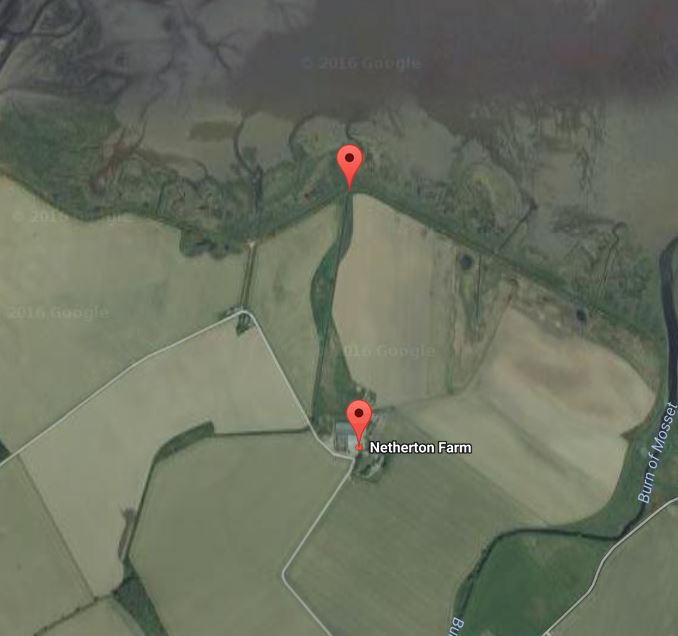
We stopped off at farmland (it is a track just off Netherton Farm, Forres IV36 3TN) near Invererne where we walked down a path leading to the River Findhorn (see below). It looks as if you are entering the farm but, in fact, you skirt round it until you find a small lane with hedgerows each side and a raised mound at the end that overlooks the RIver FIndhorn. The field on one side had recently been cut and baled and the bales were alive with Yellowhammers and Dunnocks. The bushes also held Goldfinches and Robins. A small flock of Linnet settled briefly on a shrub before bouncing off.
When we got to the end of the path we met a shooter with his dog but he obligingly left pretty much straight away. It always amazes me that you can pretty much hunt any waterfowl in the winter . The main birds we saw were Pink-footed Geese but there were also a few other species. On our walk back to the car we got the Yellowhammers and Dunnock again but this time joined by a small flock of Tree Sparrows !
Up at Findhorn Bay we found an extremely high tide (it has been a full moon) and it was clear that this wasn’t going to productive at such a high tide. Instead we went on to Roseisle Forest where we could hear both Crested Tit and Crossbills but could not locate either species. As we stood in the car park a Greater-Spotted Woodpecker flew overhead and walking to the sands we got a nice Treecreeper and out on the water was a Gannet, some Eider, a couple of Guillemot, a Red-crested Merganser and best of all, a Red-throated Diver, another “year tick”.
Next up was Burghead. The tide was pretty high in the harbour and, apart from a single Redshank and to groups of Turnstone on the harbour wall, the only birds of note were a few Cormorants and an Eider. We decided to go round to the other side of the peninsula (IV30 5TZ) where there is a big car park and from here we looked out to sea. There were a few scattered Guillemot and more Eider. I found a group of half a dozen Common Scoter and there was also a small group of four Shags.
One frustrating thing that happened here was that John thought he had spotted a Little Auk. There had been one seen not too far away a few days before but John had been sceptical of the correctness of that sighting. With this he was more convinced but the bird kept diving and disappearing under the swelling waves. At one point I thought I had got the bird and John also had him scoped; then, suddenly, the bird was gone so whilst John could regard it as a sighting, I didn’t think I could really tick it without much better views.
Rather annoyed at this chance of a “life tick” for me gone in the surf, we moved on to Lossiemouth also with a very high tide still present. Moving on a bit to the Lossiemouth Bay Caravan Park (IV31 6JJ) where the River Lossie meets the western end of Spey Bay, we stopped for our packed lunch and scanned the water finding a nice group of Brent Geese whic John later emailed me about after he had made enquiries of local birders and these were seemingly “Dark-bellied Russian birds” We also saw some Wigeon, a Grey Heron, some Tufted Ducks and and few Teal.
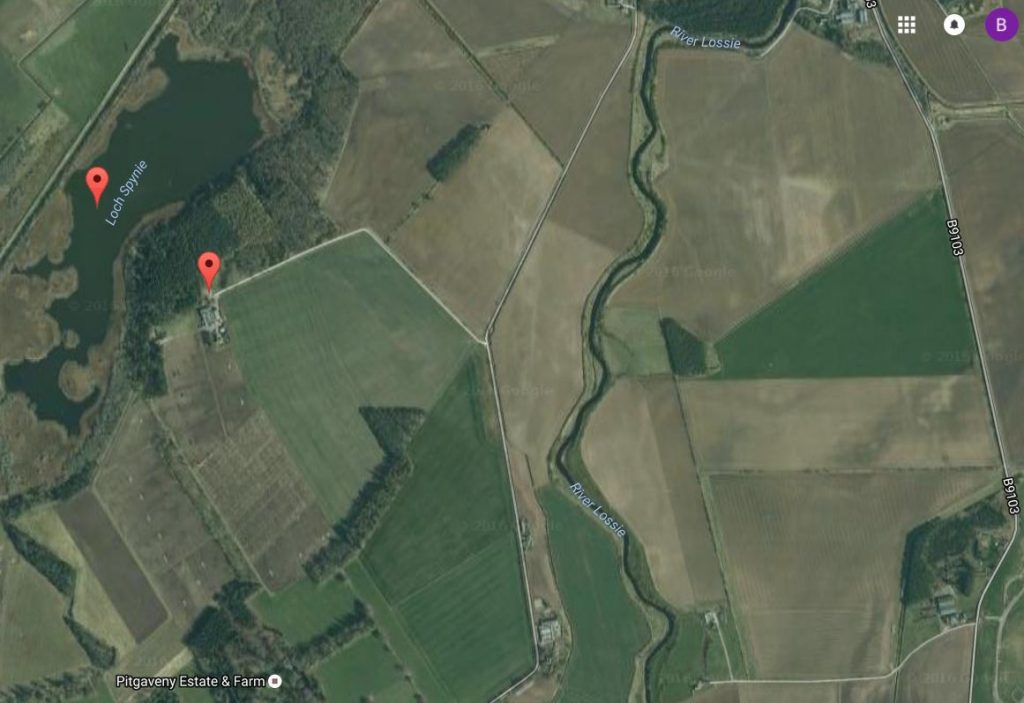
After we had eaten, we returned to a car park situated just before you get into Lossiemouth coming from the west (IV31 6QS) which gave us views of probably the only promontory into the water than was not inundated. Here we got a Single Curlew, some Oystercatcher, some Turnstone and a nice group of Purple Sandpipers. We didn’t have time to go to Spey Bay so John decided that we should go to Loch Spynie (pronounced as in cactuses), an RSPB site I had never been to before and one that is apparently notoriously difficult to find. Gordon Hamlett’s book on Highlands Birding has a little map of it. Even when you get there you are not entirely sure as it appears to be a bit of a farm that you park in befoe going through a gate down to the loch (see below)
Just before we entered the hide a Great Spotted Woodpecker appeared on a tree in front of us and when we entered the hide a chap said that we had just missed a Marsh Harrier. Fortunately for us it rose from the reeds and gave us a ten minute display of hanging on the wing and moving around the marsh effortlessly without needing a wingbeat. On the water were a bunch of Tufted Ducks, some Greylag Geese, lots of Little Grebes and some Swans and Mallards. It was a very nice little hide and good woodlands. It has to be said that it is a bit out of the way and not that easy to find probably but the Marsh Harrier was worth it.
The afternoon was wearing on and we had to get back to Grantown. John decided to go back across Dava Moor and said that it was worth looking for Hen Harriers just in case. He didn’t sound too convinced but the whole matter became irrelevant when we spotted a Golden Eagle silhouetted beautifully against the blue sky flying into the wind and so giving us a good few minutes to watch it as it traversed the sky in the direction of the Findhorn Valley. It was so beautifully outlined against the sky that it was almost as if it had come from a field guide.
A great, and unexpected, end to a good days birding – and it didn’t rain once. A great day with two more “year ticks”, Red-throated Diver and Black Grouse. My year list is now up to 194 ! Pity about the Little Auk !!!
Bird Sightings : Dorback
| Black Grouse | 5 |
| Pied Wagtail | 1 |
| Reed Bunting | 1 |
Bird Sightings : Moray
| Pink-footed Goose | 100 |
| European Robin | 2 |
| Dunnock | 4 |
| Yellowhammer | 24 |
| European Goldfinch | 1 |
| Common Linnet | 50 |
| Eurasian Tree Sparrow | 6 |
Bird Sightings : Roseisle Forest and Dunes
| Common Eider | 6 |
| Red-breasted Merganser | 1 |
| Red-throated Diver | 1 |
| Northern Gannet | 1 |
| Common Guillemot | 2 |
| Great Spotted Woodpecker | 1 |
| Eurasian Jackdaw | 15 |
| Rook | 20 |
| Eurasian Treecreeper | 1 |
Bird Sightings : Burghead
| Common Eider | 1 |
| Common Scoter | 6 |
| Great Cormorant | 6 |
| European Shag | 4 |
| Common Redshank | 1 |
| Ruddy Turnstone | 12 |
| Common Guillemot | 4 |
| Herring Gull | 6 |
| Great Black-backed Gull | 6 |
Bird Sightings : Lossiemouth
| Brent Goose | 12 |
| Eurasian Wigeon | 8 |
| Mallard | 30 |
| Common Teal | 3 |
| Grey Heron | 1 |
| Eurasian Oystercatcher | 12 |
| Eurasian Curlew | 1 |
| Ruddy Turnstone | 12 |
| Purple Sandpiper | 8 |
| Eurasian Magpie | 1 |
Bird Sightings : Loch Spynie
| Greylag Goose | 30 |
| Mute Swan | 3 |
| Mallard | 30 |
| Tufted Duck | 30 |
| Little Grebe | 5 |
| Great Cormorant | 3 |
| Eurasian Marsh Harrier | 1 |
| Great Spotted Woodpecker | 1 |
| Common Chaffinch | 4 |
Bird Sightings : Dava Moor
| Golden Eagle | 1 |